
What a Carson Resident Lookup Can Confirm
A one-person search works best when it splits into separate record questions. Ownership belongs to property custodians. In this region, that means the Los Angeles County Assessor and RR/CC. Trial-court involvement lives with Los Angeles Superior Court. Certified vital copies come from the LA RR/CC or the California Department of Public Health. Elections offices guard voter information. State business and licensing systems, in turn, describe entities and professional credentials. So before any Carson resident lookup begins, sort what you want into these five bins: property, court, life events, registration, and affiliation.
| Record | What it can confirm | Where | Access |
|---|---|---|---|
| Assessor parcel | Ownership interest, situs, APN, mailing lead | LA Assessor Portal | Free address or APN search |
| Recorded deed | Transfer parties and legal description | LA County RR/CC | Party/year index and paid copy |
| Court case | Party role, case type, dates, public disposition | LA Superior Court | Case number access; name search fee |
| Vital copy | Birth, death, marriage, or filing information | RR/CC, CDPH, or court | Eligibility and copy type control |
| Voter status | Authenticated personal status and districts | LA voter status | Self-lookup, not an open directory |
| Business or license | Entity, agent, credential, status, public discipline | SOS bizfile or DCA | Free state search |
Start from whatever is already known. An address points straight to a parcel search. A case number points to a court search. For a certified vital copy, a date plus a relationship outweighs a name alone. Every lookup result gets safer when its source and date stay attached to it.
Carson Resident Lookup Needs a Second Identifier
Los Angeles County is huge, and Carson names repeat constantly. So write down a second identifier before opening any court or deed result: a middle name, an approximate age, a known street, a business file number, a license number, a spouse or parent name, or a tight year range. That identifier proves nothing by itself. It simply gives the residents directory search a test that a same-name match must pass.
Spelling variants deserve respect. Directory and court systems drop middle names, flip surnames, shorten streets, and copy typos straight from the original filing. Compare the party role, courthouse, filing date, address history, and document type before trusting anything. Never merge two Carson records just because the first and last names look alike.
Property data adds its own trap. An assessor record may list an owner interest or mailing address while the parcel holds multiple units or an entirely different household. A recorded deed proves a transfer and a legal description, not who actually lived there. When the goal shifts from one person to every address on a block, switch to the Carson street directory workflow rather than forcing a name search to answer a street question.
A clean note lists the source URL, the record date, the identifier used, and the fact the record truly supports. That habit turns name collecting into real verification.
Carson Court Records Need Case Context
California keeps no statewide trial-court party index. Carson cases run through Los Angeles Superior Court. Its Find a Case entry offers a case-number path across civil, criminal, family, probate, and small-claims matters. Party and defendant name searches carry cost-recovery fees. They also demand guest or account sign-in under the court's access rules. Federal cases go through PACER, not the county search.
A public docket can display the case number, courthouse, filing date, type, status, parties and their roles, counsel, register-of-actions rows, hearings, and a public disposition or judgment. Online images narrow sharply for criminal and family files. Juvenile, adoption, sealed, and other protected records can stop the search cold. And remember: a charge in a docket is not a conviction. The California courts case-lookup explanation sorts out the difference between a case index and the underlying file. It also lays out the limits on remote searches.
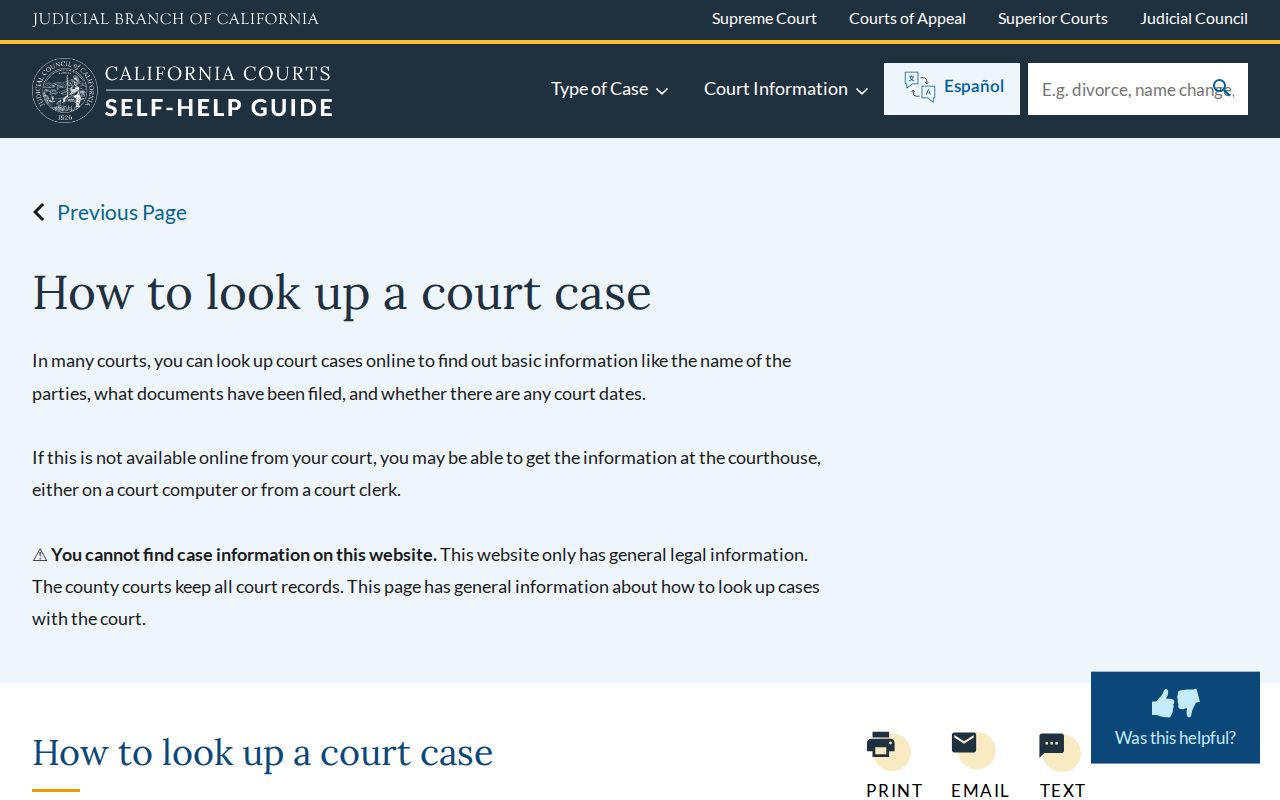
The public entry screen starts a Carson case search. It is not a statewide criminal-history tool. Treat it as one courthouse's index, nothing more.
Fees are simple to plan for. Plain copies run $0.50 per page, certification costs $40 per document, and a search that takes staff more than ten minutes can add a $15 fee. The clerk can tell you which copy channel fits your request. A narrow ask works best. Give a case number and date rather than expecting staff to match a name alone.
Read Carson Court Records Before Images
Know the three levels before you rely on anything. An index is a pointer. An image is the filed page itself. A certified copy adds the court's own certification. Those distinctions decide whether your Carson record search actually answers the question. The exact role, address, or outcome in a proceeding is what a case turns on, and only the right tier of copy proves it.
- Docket
- The court's running list of filings, hearings, and actions in a case.
- Index
- A searchable summary that points to a case or document but may omit the full text.
- Disposition
- The recorded outcome or status of a matter, which must be read in context.
- Certified copy
- A court-issued copy carrying certification for a permitted official use.
Use this inventory to note what an LA Superior Court result actually displays:
- case number, courthouse, filing date, case type, and current status;
- party names, roles, and counsel where public;
- register-of-actions entries with document titles and dates;
- past or scheduled hearings and a public disposition or judgment;
- links to civil or small-claims images when the court offers them.
Older files live differently. The Archives and Records Center may ask for a party or case number. It may also want a year before it can pull anything.
Watch for dead ends. If a search stops at the index, that is your cue to request the official copy procedure. Do not patch the gap with a commercial compilation. The California courts copy-record guidance walks through the search, archive, copy, and certification steps in order.
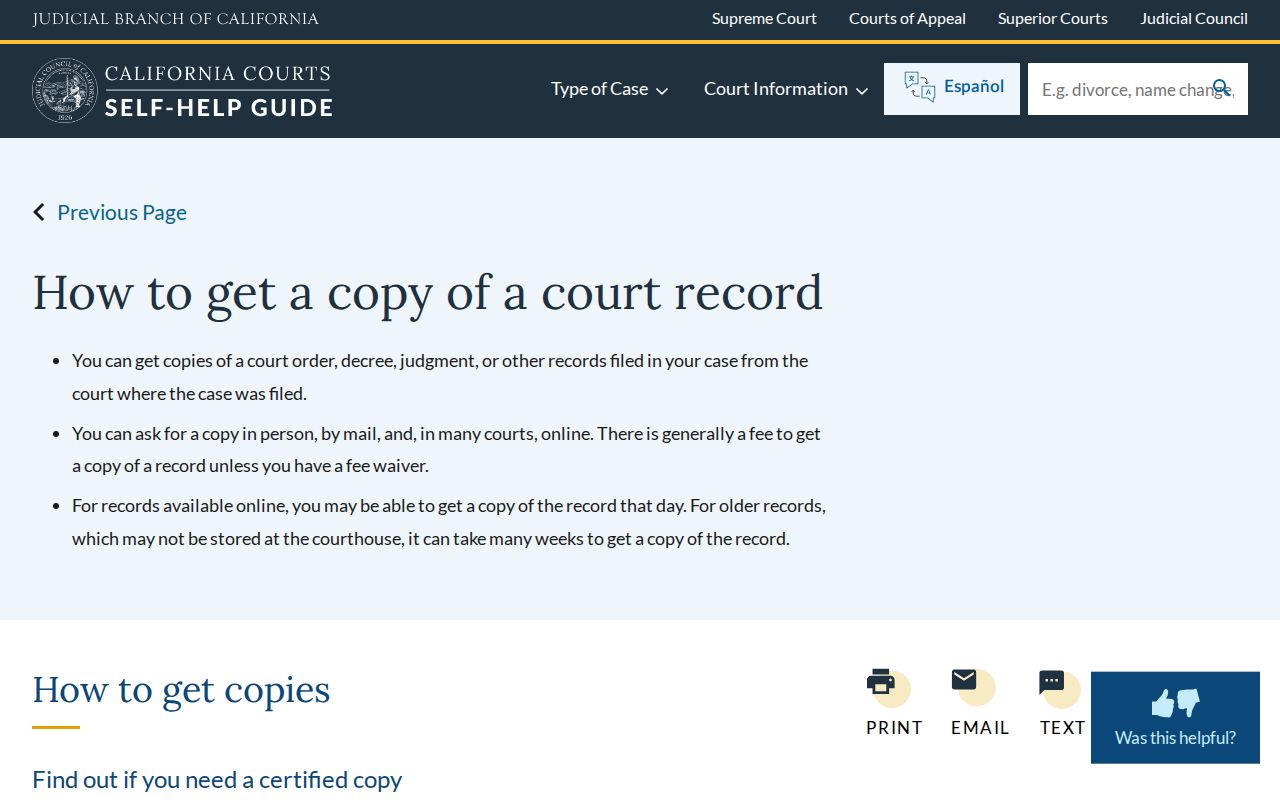
Copy instructions are the bridge. They show how a person-centered search moves from a public case pointer to a verified court record.
Carson Vital Records Use Different Gateways
Vital records in California open by record type and copy eligibility, not by a single clock. No fixed waiting period unlocks every certificate. LA RR/CC issues county birth, death, and marriage copies. CDPH maintains the statewide birth, death, fetal death, marriage, and divorce files. A divorce decree belongs to Superior Court, and the CDPH dissolution certificate for 1962 through June 1984 is a narrow filing record rather than the decree itself.
For births, LA County covers county events since 1866. Its authorized online vendor adds a handling fee. Statewide birth coverage at CDPH begins in July 1905. An authorized copy can require a qualifying relationship plus a notarized sworn statement. An informational copy exists where law permits, but it is stamped not valid to establish identity. Public and confidential marriages are separate tracks. Anyone may request a public marriage copy. A confidential marriage stays closed except to the spouses or by court order under Family Code section 511. Adoption and sealed records remain restricted, and no name search through a residents directory gets around a seal.
Fees for 2026 at CDPH run $31 for a birth copy, $26 for death, $19 for marriage, and $18 for a dissolution certificate. LA County lists its authorized online birth copy at $34. Confirm the live application and fee before mailing payment. A no-record search still consumes the search fee.
Carson Business Records Are Not Residence Proof
The California SOS bizfile can connect a person to a corporation, LLC, partnership, nonprofit, or filing history. It can also reveal a filing history. Search by entity name or file number. A record shows formation date, status, jurisdiction, agent, and address. It also lists officer or manager fields and downloadable filings. The basic search caps results at 500 closest matches. Filter by entity type for precision.
The California DCA umbrella search accepts board, license type, license number, and business name. It also accepts first and last name and registry number. Advanced controls narrow city, county, status, discipline, and public documents. A license confirms a credential or public professional affiliation. It does not confirm a home address. A business or agent address is not automatically where someone lives.
For a Carson trade name, compare the state filing with Los Angeles County fictitious-business-name records. Also check the City's Finance office. Carson runs business licensing through Finance. The City publishes no public licensee directory. A payment or renewal portal is a transaction channel, not a resident lookup.
State lookups serve as second identifiers. They work best when the exact entity or license number is already known. The SOS UCC search adds debtor, secured-party, filing-status, and related-image fields. Use it when a financing record is the relevant clue. None of these tools gives a current address record for Carson.
Carson Voter Records Are Authenticated
The LA Check Registration Status tool asks for last name, date of birth, house number, and ZIP Code. That is deliberate. No browsing by street or name. California My Voter Status authenticates with first and last name, date of birth, driver's license or ID, or a prompted Social Security alternative. The result shows the user's own status. Party preference, residence or mailing information, precinct and district, election location, and ballot status or participation all appear.
Neither tool is an open Carson residents directory. County voter-file products sit behind an application. Expect identity and contact information, a permitted purpose declaration, and in some cases a copy of identification. Fees run $1.50 for a certified own-registration record, $6.75 for another permitted record or voter history per name, and $5 per name for a file search, with electronic file prices set by jurisdiction. Submit through Election Information at Norwalk or by the directed mail route.
Elections Code section 2194 and Government Code section 7924.000 shield home address, phone, email, certain precinct or identifier data, and prior-registration information except for authorized uses. Safe at Home participants receive confidential voter registration. Authorized uses are narrow. A failed personal search proves little. It can mean an input mismatch or a changed record, not that a person does not live in Carson.
Carson Resident Leads for Heirs and Classmates
An heir search starts with a decedent's full name and death date, then moves through LA probate case material: petitions, notices, inventories, orders, and a decree of distribution where public. A former classmate is a different trail. CSUDH archives, yearbooks, and newspapers hold the traces. Ask an institution to forward a message rather than disclose a protected address.
Birth-parent research runs through adoption and sealed-record procedures in California. The original file stays sealed. An informational birth copy does not automatically unseal an adoption record. Use the official state, court, or CDPH channel for the relationship and circumstance. A public directory result is not a way around a seal.
For family history, the Carson city directory collections can supply an older name and address pair. That gives a later search a second identifier. Check the record at the named custodian.
Carson Safety Records Need Careful Reading
Carson safety lookups work best through narrow official tools. The LASD Inmate Information Center handles booking and custody questions. CDCR CIRIS finds a state-prison record. California Megan's Law runs a statutory registry. It is limited to the identity and location fields the law permits. Federal questions point elsewhere: the Bureau of Prisons locator or PACER, depending on what you need. After fraudulent use of personal information, turn to IdentityTheft.gov, not a people-search compilation.
A registry entry can carry a photo, name and aliases, age, and physical descriptors. It can also list the qualifying offense and statute, category or risk details, and a disclosed location. The site itself warns about mistaken identity and harassment. It is not a comprehensive resident directory. An arrest or registry entry is never a conviction, nor proof of current activity.
The California Megan's Law search remains the official safety source. Its own anti-misuse rules are attached.
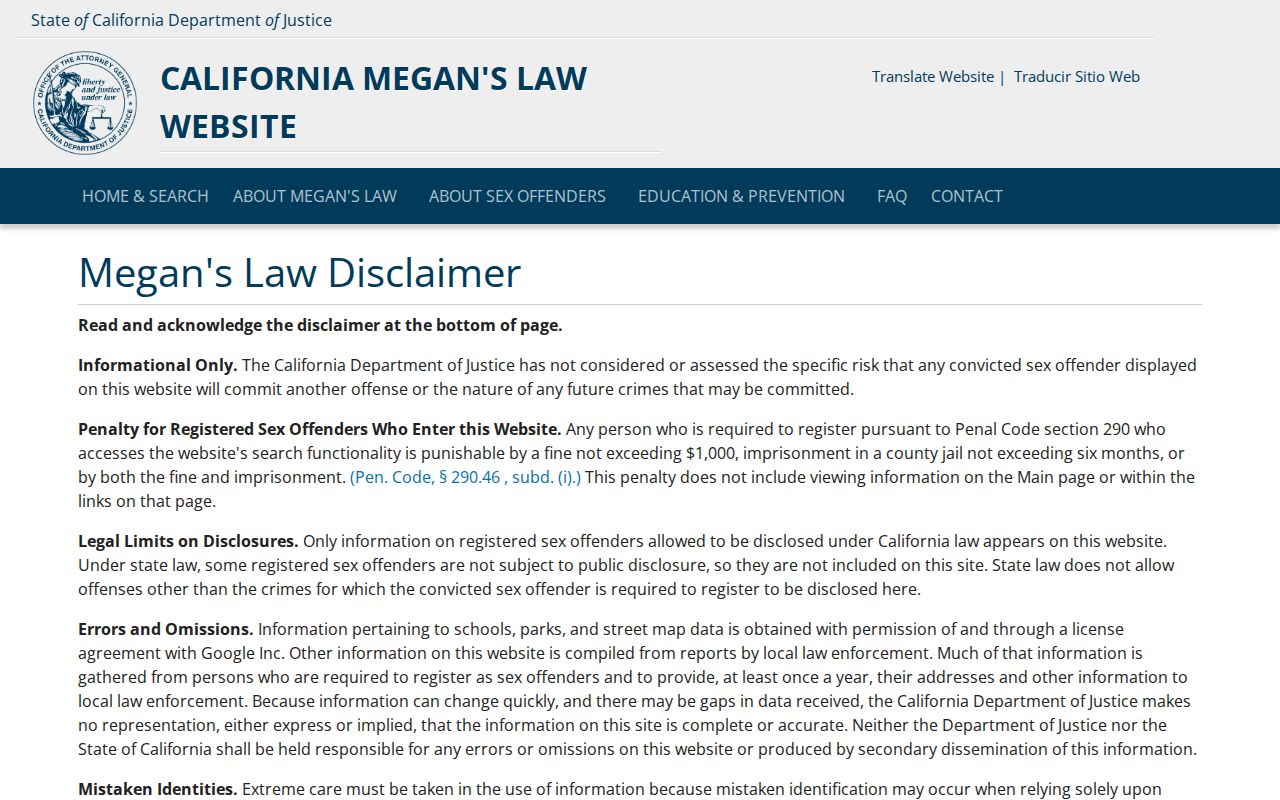
That registry warning belongs with any Carson record note. Keep the two together. For federal court matters, PACER searches party names, case numbers, courts, and docket entries. Billing runs $0.10 per page with a $3 cap per document, subject to stated exceptions. Before treating a federal result as the right person, confirm the court. Also confirm the case identity.
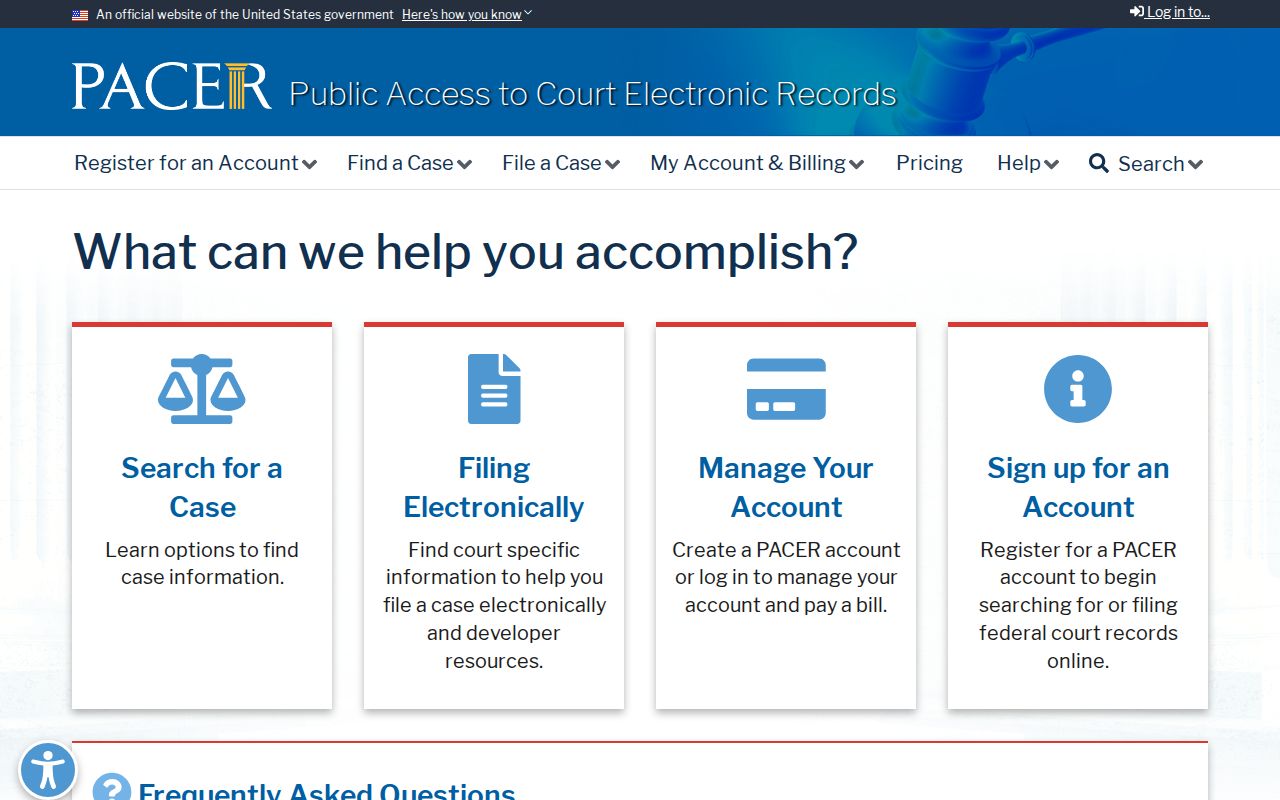
A federal docket stands apart from Los Angeles Superior Court. Cite it by its own court and case number, always.
Verify a Carson Resident Record
Verification means matching a name to a record's role and date, not gathering every stray mention. Save the source document itself. Snippets fade and mislead. The steps that follow work for a Carson name check whenever an address or parcel is available.
- Write the exact name, spelling variants, known Carson address, and date range before searching.
- Use the Assessor or Carson parcel map to anchor a property owner lead, while noting that ownership is not occupancy.
- Run LA Superior Court by case number or permitted party-name route and compare party role, courthouse, date, and case type.
- Use a business filing, professional license, directory year, or public vital index as a second identifier rather than as final proof.
- Order a certified copy only through the custodian when the record type and eligibility support it.
Stop when a record is sealed, confidential, or protected. The office searched may simply not hold it. Pushing further wastes time. A targeted California Public Records Act request reaches the actual custodian. It can ask for an identifiable existing record. The agency does not have to answer questions or build a new database. Under Government Code section 7922.535, the agency generally makes a determination within ten days. Unusual circumstances allow a written extension of up to fourteen days.
Lawful Limits on a Carson Lookup
Some Carson records stop at a wall built by privacy law or a protective program. Safe at Home gives eligible survivors a substitute address, mail forwarding, a service-of-process agent, and confidential voter registration. The federal DPPA restricts access to DMV personal information. Sealed adoption, juvenile, dependency, and confidential marriage records sit outside ordinary public lookup paths entirely.
Commercial compilations carry their own hazards. Stale addresses, inferred relationships, and merged names are common in them. Use one only as a lead toward a named official source, if at all. An error in an official record belongs with the agency that created it. Document and report suspected misuse or threats through the custodian or the right law-enforcement channel.
Lawful use. A Carson name search is for personal, lawful research, family history, civic understanding, or safety awareness. Do not use records to stalk, harass, intimidate, or harm anyone.
A careful Carson lookup ends with four things: a source, a date, a record identifier, and a plain statement of what was not established. Anything less is guesswork. That is the line between a verified record trail and a hunch about a person.